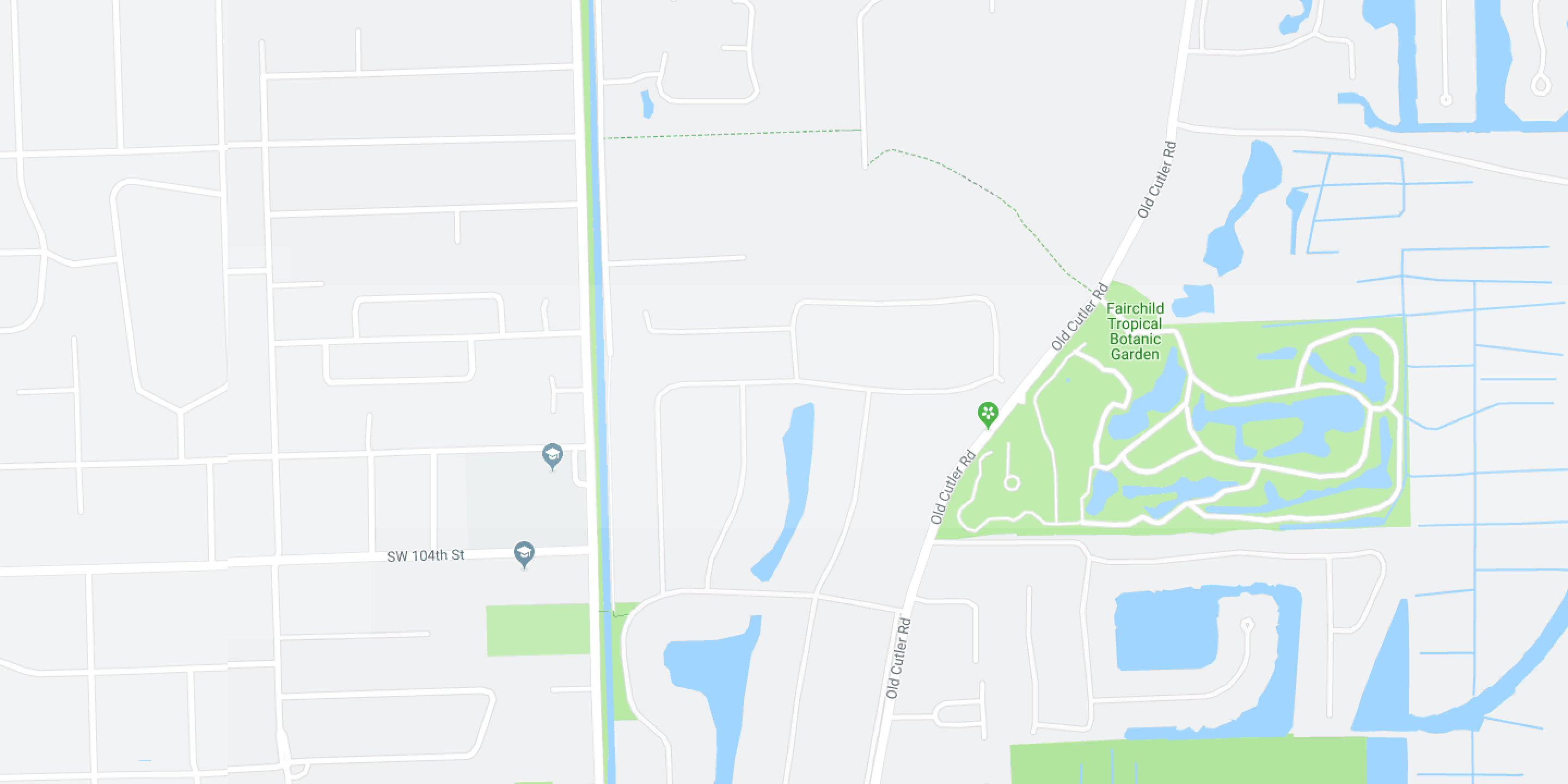
6:45 AM: I had hoped that yesterday was my last entry for this cold event – sadly it was not. They were predicting scattered frost inland, but only a slight chance. The temperature did much like the day before and I went to sleep until 4:00 AM. At that time it was 39°F at my home. There can be a large difference (up to 6 degrees) between my house and the frost pocket in the Fairchild Farm on a still night, as the air in the entire glade around the Farm settles into the low spot. Still feeling ok I went to sleep for another hour.
At 5:00 AM it was 37°F at the house and began to dance a bit and there were also high clouds. I felt we were safe, so I did not go in until 6:00 AM. This was the mistake, for it dropped quickly at the Farm and was already 28°F in the frost pocket. Heavy frost was across most of the Farm. Let me reiterate that my thermometers are well-calibrated, so at 18 inches above the (dead) grass at about the middle point of the frost pocket it was indeed 28°F. The rest of the Farm was probably at 32 to 34°F. Still nights are like silent killers, stealing in under the cover of the pre-dawn darkness. I was caught. I was not asleep, nor unaware. I simply miscalculated. Needless to say I am not happy with the situation.
The irrigation is now running and we are a warm 37°F all over the grove. By the time I put it on there was frost across all exposed regions of the Farm. How much damage? This is the question that I now just can’t shake. Maybe very little, maybe a bit more. The problem comes from losing just one valuable clone that means a trip half-way around the world and 2 years of time to replace – all because I didn’t truth my calculations with a look at the thermometer. I trust no-one when it comes to cold protection.
Note to self: don’t trust the guy in the mirror either!
9:30 PM: It is 42°F, which does not give me a great deal of good feelings about the chance of an early morning frost. Everyone is predicting just that and so it would appear that they are correct. However, a most lovely bank of clouds moves in and the temperatures bounce up to 45°F. So now the alarm can be set for 1:00 AM and I can get some sleep.
1:00 AM. Still above 40°F, but no clouds. There is a north breeze now. Time to reset the alarm for 4:00 AM and see.
4:00 AM. 37.5°F and bouncing around. Plenty of breeze, but no clouds. Given the breeze the frost pocket will be at the same temperature, so there is no need to worry yet. So I can wait and see. Does not look like a frost.
We bottom out at 35°F across the entire region due to the wind. No worries. Early I must take my son to school through what were tomato, pepper and bean fields. What was the day before a bee-hive of activity is now without a soul. The crops are frosted from yesterday and lay in ruin. It makes me sad, but I know these vegetable men and women – they will be back cultivating and planting within days, their hope and seedlings springing eternal. Agriculture is a tough business and these are tough people.
We have fared well given all that has come to pass these past 10 days of cold. Certainly we will have damage – the jackfruit have lost much of their crop and will need time to recover from the freezing winds. But, we have lost no trees that I can see. Damage will continue to show up for weeks, but we have averted a disaster. We have till 15 February, another 4 weeks of danger. Let us hope that our luck will hold.

10:21 PM: So much for the 10 to 15 mph winds and the 20 mph gusts. The blustery evening predicted by NOAA is blustery no more. We are below 5 mph and on a frost track it would seem - 35°F in the frost pocket so I still have an hour to wait. There are clouds and it simply does not seem possible to frost, but the thermometers tell a different story. So I wait.
![]() |
| An irreplaceable mamey sapote with irrigation protection. |
1:20 AM: The temperatures dance around with the clouds and the variable winds of 3 to 7 mph. Finally the temperature in the frost pocket reached 32°F. Too much wind to run irrigation and not enough wind to keep it turned off. I could not see clear to the winds picking up to what was predicted and the clouds were now gone, so I put on the water.
Drove through the grove making sure all was ok with the emitters and checking and double checking the mangos. There is simply too much to lose in the mangos to have a clogged emitter kill a tree, or worse to leave the diesel running on too low of rpm – we needed the coverage and the volume this night.
All the systems worked as well as can be expected and I awaited the morning.
![]() |
| Icy weeds at dawn under the mango collection. |
6:45 AM: At dawn I was greeted by the disturbing sight of ice on much of the structure and the plants themselves. This may not be all bad if the ice continued to get enough water to avoid sublimation. When ice goes to vapor one does not want to see the result on the plant underneath. A huge amount of energy is consumed and the temperatures beneath the ice plummet resulting in severe damage. All told it doesn’t look too bad. Temperatures fell to a minimum of 30°F across the Fairchild Farm. It could have been better and it could have been worse.
Now we wait until the ice melts away and turn off the water. Then we wait to assess damage. Severe damage will be apparent almost immediately, but there is also the latent damage that follows such a prolonged series of cold events. Cambium damage to the trees may not become evident for a week, a month or even more. This marks the 9th night in the 30sF for us this January. We were lucky on the first 8 nights, but sometimes it takes just one. We will wait, we will assess and more forward.
After two balmy days with lows near or slightly above 40°F we once again are in front of the 8-ball. Forecasts are for snow and sleet down to Central and possibly South Florida, wind-chills down into the teens. Certainly we had a Saturday of disbelief and apprehension at the approaching juggernaut.
In our minds we know that when there are winds there is no frost and mangos do not feel wind-chill, these numbers only serve to make horticulturists nervous or angry depending on how much sleep we have had. The front came and it was a 45°F drizzle over the entire day. We were forecast for 33°F and clouds and wind. Then they dropped their predictions down to 28°F with some clearing and 25 mph winds. Needless to say we were concerned.
During the night the temperatures fell quite slowly, with cloud cover and rain and just a bit of wind. About midnight the clouds began to break up a bit and the temps went down faster to 36 or 35°F. After this we got more clouds and the wind arrived. By dawn we were still at 33°F with 25 mph winds – no freeze, no frost, just unbelievably cold.
About midnight my nerve broke and I thought about irrigation if we did indeed get down to the 28°F point. I even talked to my brother about it. He brought me back to reality and a belief in the laws of physics once again. One simply cannot apply irrigation in winds about 5 to 10 mph when temps are below freezing. To do so is to supercool your leaves as the water and ice evaporates. The wind carries the water away and interrupts the throwing pattern of the sprinklers. Don’t try this at home because you will severely damage and even kill your trees. This is the fastest way to take a bad situation and make it a disaster.
This morning there were a few people who did run irrigation. This is equally unadvisable. The temperatures across South Florida, at least at my house and the Fairchild Farm, were at a uniform minimum of 33.5°F (18 inches above the ground). This is above freezing. There would be absolutely no reason to run irrigation. Those who did run could only hope to cause supercooling due to evaporation with the strong winds. The ice along our fence at the Fairchild Farm from our neighbor’s irrigation can attest to this. I have a wind-break row of jackfruit along this fence that was planted to mitigate the effects of his irrigation. They took some damage last night, but did their job.
9:34 PM. Temperatures fell as darkness set in and then held steady for an hour or two. However, the wind is nearly absent and the cold air quickly set into the cold pockets around South Florida. In our very own frost pocket we already had 31°F and so I put on the irrigation. The day had been spent fixing emitter heads and clearing obstacles. Now the water is running and as long as there is no dramatic drop in temp or increase in wind all should be ok. The warm ground water will keep the trees warm and without frost formation.
I am disappointed that the temperatures became so cold so quickly, but given the huge arctic airmass on top of us we should not be surprised. Tonight whatever bloom that is out will have a difficult time, but more bloom will come as long as the trees are not too badly hurt.
Another day and night and another cold spell. I do not like them any more now than I used to. In fact I think I am getting too old for this stuff – until next week of course.
…..sometime later in the night.
My brother, Rob Campbell, the leader of the Frost Watch for Signature Palm nursery rang me up at about 11:20 PM to announce the surprising arrival of cloud cover. Thanks Rob for bringing me out of my doom and gloom scenario and back on to the reality of Homestead.
There was no way we were going to make it out of this one, just like every cold event before, and yet here came the clouds and we got by again. Thank you clouds and wind for averting a disaster. Our low outside of the frost pocket was near 33°F, frost yes in spots but overall relief.
So ends 6 nights of temperatures in the 30°sF. We are supposed to have a reprieve for a day or two and then get right back to it. Now we lick our wounds, make are preparations, fix our mistakes and move on.
Curating one of the greatest treasures of the mango world does not mean full-time collecting adventures and mango parties. When Mother Nature sets her sights on South Florida in the form of an arctic blast, the Tropical Fruit Program staff takes action to protect this world resource.
Preparations began years earlier in the field management decisions for row orientation and irrigation systems that are properly designed to be of use in a wide range of cold events. Pruning, fertilizing and weed control all contribute to the "protectability" of the Williams Grove mango collection at the Fairchild Farm. Nothing was done by accident.
2:25 AM:
…..Every cold event is different and you will never understand one until you are dead. This has always been the common wisdom. Earlier today we wrapped the young, vulnerable trees with pine needles to protect their precious trunks. We covered the vegetable garden, installed drip lines and watered all collections except mangos for 3 hours. This watering will provide a little heat during the night and a bit of a margin of error.
So, here I sit at about 2:30 AM watching the temperature drop. Sorry, no quips or play on words here. It really is not fun. There is everything to lose and very little to gain.
Frost watch will test your will, stamina and your self-confidence. You are the last word. Others can give advice and it is welcome as long as it is well thought out. But at the end of the night it all rests with you. When do I turn on the water, how much wind is too much wind. What will my neighbors do?
So, here I am 2:30 AM, 35.5°F and my hand on the trigger. No irrigation as of yet. Running water all night does not help the collections in general if we get by the cold. So, I wait……

2:45 AM: The wind still fresh at times the temperatures have bumped up a degree. Belle Glade and Ft Lauderdale also have come up a degree. Dare I feel hope – no just a short reprieve. We are 5 long hours from the warmth of the morning sun. Hope is not a luxury yet.
Some faint clouds in the sky – moisture to hold in some heat. The little jump was probably due to this. Or could the wind begetting enough to the north to actually be bringing some warmth to Homestead. Time will tell….
3:27 AM: The wind continues to blow and inch closer to due north. Due north means passing over the Gulf Stream and sweet heat. Temperatures are up a degree, 36.5°F. I have taken my hand off the switch for the moment. Let’s see what this is going to do. The wind is blowing enough that I dare not run for fear of evaporation and worse damage to the trees.
Talked with Jonathan Crane, Director of Univ. of Florida - TREC in Homestead. He has turned on the irrigation for the vegetables on the station. I have only the vegetable garden to protect and it is covered and has the drip on for the last 2 hours.
Thus the fruit trees, small as some are, will not see the irrigation unless the wind drops and so too the temperatures. Now I will nap a bit, the gift I received from the degree in the field.
3:39 AM: Can’t doze off when we are at the critical moment. A solid 37°F in the frost pocket at the Farm. On a night like this the frost pocket is not off too much from the surrounding orchard due to the movement of the air. All the temps are coming up. Still too early to call it, that is, a lull in the wind and we are back in danger, and in a hurry. So, some coffee, check Belle Glade and Ft. Lauderdale and wait.
4:42 AM: Still holding on at 36.5°F in the frost pocket. Wind still from 8 to 10 mph out of the NNW. Looking better and better. A few thin clouds to the northeast. IF the winds hold till dawn we are good. They show no sign of dropping, but this could of course be deceiving. Lots of wind chill advisories on the National Weather Service. Fortunately my trees are not warm-blooded, so wind-chill is not the problem. Blow wind blow, it is Homestead and air movement is our best ally.
5:11 AM: Belle Glade beginning to slip in temps and I am more concerned about the winds holding. Out to check and open the chickens and check the ponds, nursery, etc. Also get something to eat. Hopefully our luck still holds.
6:03 AM: The winds quickly died over the last 30 minutes and the temperatures dropped quickly. I started the diesel pump when the temperatures in the frost pocket were at 32.5°F. There was ice on the cars parked by the barn and some patchy frost forming on the exposed low-growing plants, but it should be fine. We have about another 1 ½ hours before the temperatures move back up above freezing. Most certainly once you start the irrigation you cannot turn it off before the temperatures come back above freezing.
Since the sprinkler heads in the mangos have not been used since last winter we now have some most unpleasant work ahead in the next hour of driving the rows and correcting any problems with the sprinklers (next time someone makes a comment about the virtues of Jack Frost nipping at my nose remind me not to hurt them).
The sky is brightening in the East and the sun should not be far behind - another wild ride on the frost watch. And, by the way, there is more in store tomorrow night.