Introduction to the Project
Is this your neighborhood? The satellite photo at right is a typical residential neighborhood in the Miami metropolitan area. Roads, houses, and other features that humans have created dominate the view, but nevertheless we also see thin slivers and tendrils of green, the unmistakable signs of plant life on almost every block. The life in these areas—the planned, wild, and semi-wild areas of the city—are what we will explore in this project.
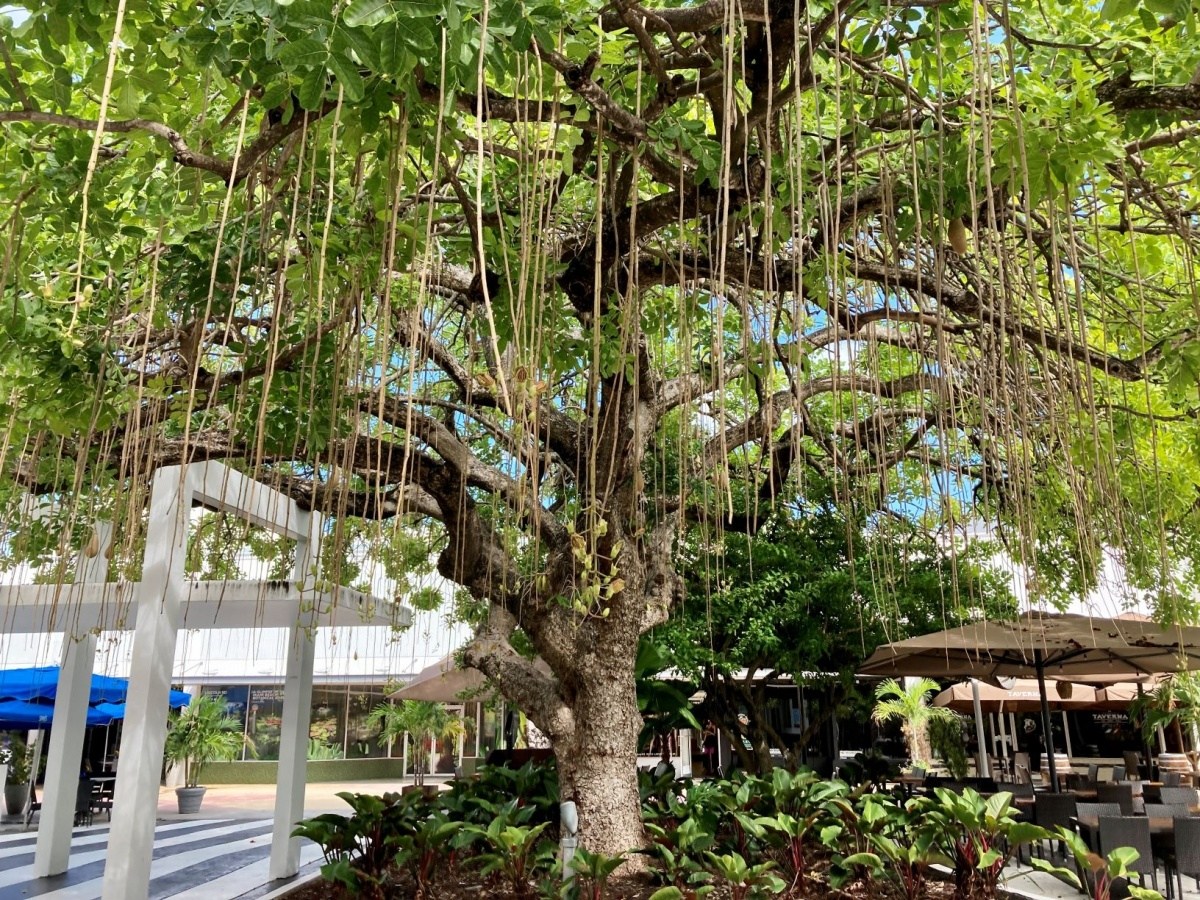
What plants live in cities? And what animals live and feed on those plants? Like a forest, swamp, or desert, a city is an ecosystem of its own. As in any ecosystem, plants here are the foundation of the food web, providing food and habitat to butterflies, hummingbirds, bats, bees, and numerous other creatures that in turn help plants by spreading their pollen and seeds.
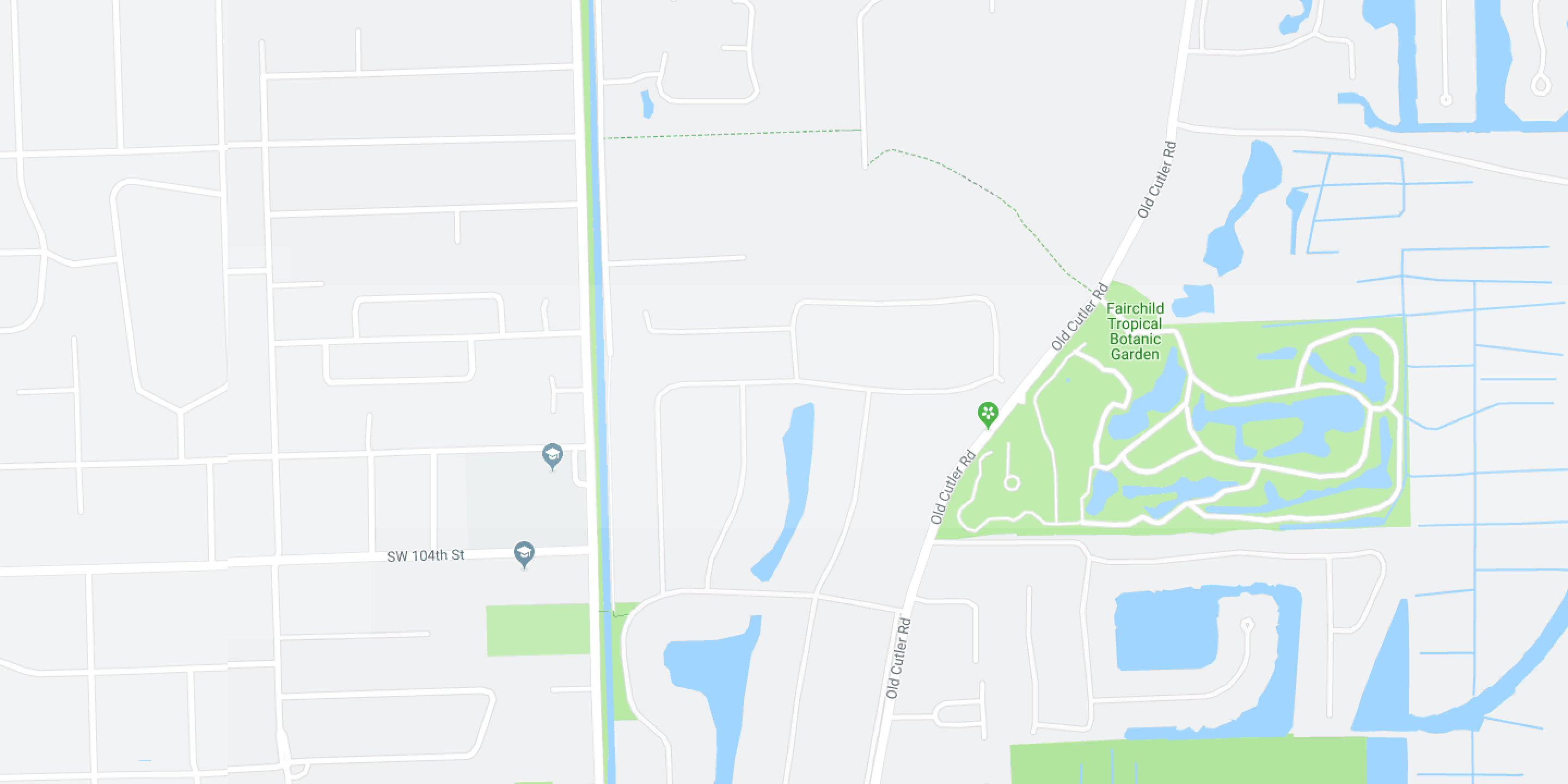
This map is your map. What you see here is a small section of a map that we will work together to build in this project. You and your peers will explore the area around your home—any area will do, including local gardens, roadsides, vacant lots, parks, schoolyards, anywhere that is safe and legal for you to find and watch plantlife. When you find examples of the native plants we are looking for and notice animals visiting their flowers, you will let everyone know by recording a point on this shared map with your findings.
Together we will build a picture of what exists in the green space just blocks away from where we live. As other citizen scientists like you explore their neighborhoods, a picture of what is out there will unfold, and it will be a map of discoveries that no one has made before—one we can use to develop specific plans to make Miami neighborhoods a better living space for animals and plants.